
I’m a Jaipur local, and every few weeks a friend or relative asks me the same thing: “We have two days. What should we see?” This guide is my answer.
I’ve kept it practical. You’ll find what each place costs for Indians and foreigners, when to go, what to skip, where locals eat and shop, and the scams that catch visitors every year.
If you’d rather have the stay and sightseeing planned together, explore our Jaipur tour packages.
| Place | Best time to go | Timings (approx.) | Indian | Foreigner |
|---|---|---|---|---|
| Amer Fort | At opening | Confirm current hours on OBMS | ₹200 (provisional) | ₹1,000 (provisional) |
| Jaigarh Fort | Right after Amer | 9:00 am–6:30 pm; last entry 6:00 pm | ₹200 adult | Check international category |
| Nahargarh Fort | Sunset | Confirm current hours on OBMS | ₹100 (provisional) | ₹600 (provisional) |
| City Palace | Late morning | 9:30 am–6:30 pm; last tickets 6:00 pm | ₹400 museum; tours extra | Check international category |
| Hawa Mahal | Morning | Confirm current hours on OBMS | ₹100 (provisional) | ₹600 (provisional) |
| Jantar Mantar | Morning or late afternoon | Confirm current hours on OBMS | ₹100 (provisional) | ₹600 (provisional) |
| Albert Hall Museum | Afternoon | Confirm current hours on OBMS | ₹100 (provisional) | ₹600 (provisional) |
| Jal Mahal | Sunrise | View from shore | Free | Free |
| Patrika Gate | Early morning or evening | Check local access | Free | Free |
The Rajasthan government composite ticket covers Amer, Hawa Mahal, Jantar Mantar, Nahargarh and Albert Hall. The department also lists Sisodia Rani Garden, Vidyadhar Garden and Isarlat.
It does not cover City Palace or Jaigarh. City Palace sells its own composite for its museum, Jaigarh and the Royal Cenotaphs.
| Separate tickets | Composite (provisional) | You save | |
|---|---|---|---|
| Indian adult | ₹600 | ₹550 | ₹50 |
| Foreign adult | ₹3,400 | ₹1,700 | ₹1,700 |
Rates are provisional. Check the current price and coverage on the OBMS portal or at the counter.
| Months | What to expect |
|---|---|
| Oct-Nov | Pleasant days, festive crowds around Diwali |
| Dec-Jan | Peak season. Warm days, cold evenings, so carry a jacket |
| Feb-Mar | Comfortable, getting warmer |
| Apr-Jun | Very hot. Do forts only at opening time |
| Jul-Sep | Monsoon. Short heavy showers, humid |
November to February is a comfortable choice for sightseeing. In May, daytime temperatures can cross 40°C. Start early, avoid exposed monuments around midday and rest in the afternoon.
Festival dates like Diwali, Teej and the Jaipur Literature Festival (usually January) change every year. Hotels fill up fast around them, so book early.
Amer and Jaigarh are north of the old city, while Nahargarh is on the hills above Jaipur. City Palace, Hawa Mahal and Jantar Mantar are close together. Group the hill forts and old city sights on separate days to reduce backtracking. Abhaneri, Ranthambore and Sambhar lie outside the city; use the Day Trips layer when planning those journeys.

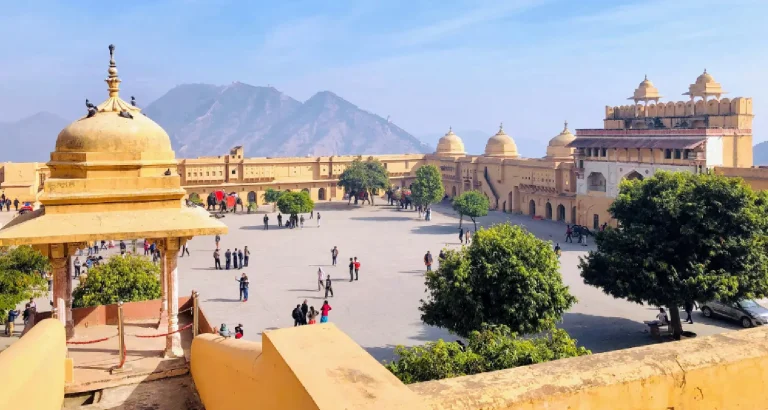
Amer (also written Amber) is a hilltop fort about 11 km from central Jaipur. Raja Man Singh I began building it in the late 16th century. Come for the red sandstone and marble halls, Ganesh Pol and the mirror-lined Sheesh Mahal.
Go early, before the crowds. You can walk up or take a jeep (charged separately). An authorised guide helps, as there is little signage inside.
I’d skip the elephant ride and walk or take a jeep instead.
Jaigarh sits above Amer. It is known for its huge cannon on wheels and views over Amer and the lake. Its ticket is outside the government composite scheme; check the separate City Palace composite offer if visiting both.
Built in 1734 under Sawai Jai Singh II, Nahargarh formed part of Jaipur’s hilltop defences alongside Amer and Jaigarh. It is a popular place for views over the city, especially towards sunset.
Expect queues and a big crowd by evening, so get there early for a good spot. The fort is a fair distance from town, so ask your driver to wait or book a return ride in advance.
The walls on the hills around Amer offer views of the fort and the Aravallis. Access to staircases and wall sections can be restricted. Check locally that your chosen route is open and permitted, avoid exposed edges and do not climb closed sections. These are different from the walls around Jaipur’s old city.
Panna Meena ka Kund is a historic stepwell near Amer and makes a short stop. View it from the permitted area and follow the staff’s instructions; access to the steps may be restricted. Confirm current entry and photography rules locally, and pay only authorised charges against a receipt.
The royal family still lives in part of this palace. The complex has courtyards, galleries, Chandra Mahal and Mubarak Mahal. The Pritam Niwas courtyard has four doors, each decorated for a season.
Chhavi Niwas is included in the higher-priced Chandra Mahal Royal Tour, rather than the basic museum ticket. Ask which rooms your ticket covers. The official site currently lists the Textile Gallery in Mubarak Mahal as temporarily closed for restoration from 27 March 2026, and Museum at Night as temporarily closed. Recheck before visiting.
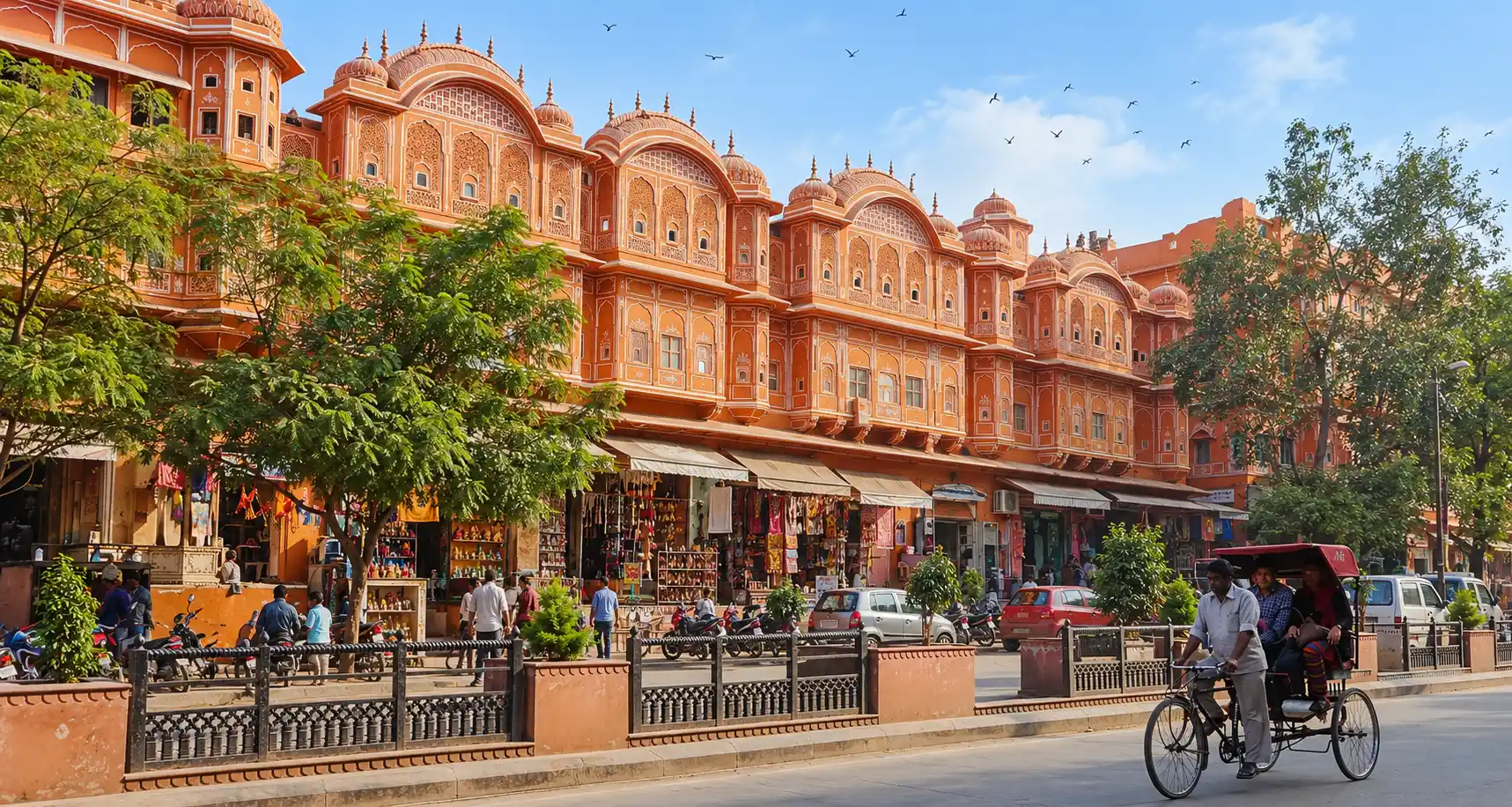
Hawa Mahal is famous for its 953 jharokhas, or small windows. Built in 1799 under Sawai Pratap Singh, it allowed royal women to observe street life without being seen.
The famous facade can be photographed from the street. Cafes opposite also offer terrace views; ask about purchases or minimum-spend requirements before going upstairs.
This UNESCO-listed observatory has 19 instruments and the world’s largest stone sundial. It makes far more sense with a guide, so spend a little on one. Avoid midday, as there is little shade.
Built in the 1800s, this is the oldest museum in Rajasthan. It’s a good afternoon stop when you need a break from the heat. Take an hour.
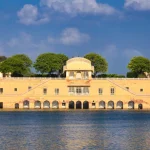
A palace in the middle of Man Sagar Lake. You can’t go inside, but sunrise from the shore is lovely. Have a chai nearby.
These are the places I’d send a friend to once they’ve seen the big sights.
| Place | Why go |
|---|---|
| Gaitor Ki Chhatriyan | Royal cenotaphs of the Kachwaha rulers at the foot of the Nahargarh hills |
| Sisodia Rani ka Bagh | A terraced garden palace with fountains and painted pavilions |
| Vidyadhar ka Bagh | A planned Mughal-style garden |
| Isarlat (Sargasooli) | A tall victory tower near the old city |
| Galta Ji | A temple complex with pools, a Sun temple and plenty of monkeys |
| Anokhi Museum of Hand Printing | The story of block printing, close to Amer |
Patrika Gate is worth a quick photo stop, especially early when it is quieter. Check local access conditions rather than assuming unrestricted access at every hour. Govind Dev Ji Temple and Birla Mandir are also worth considering; check visiting and aarti times before going.
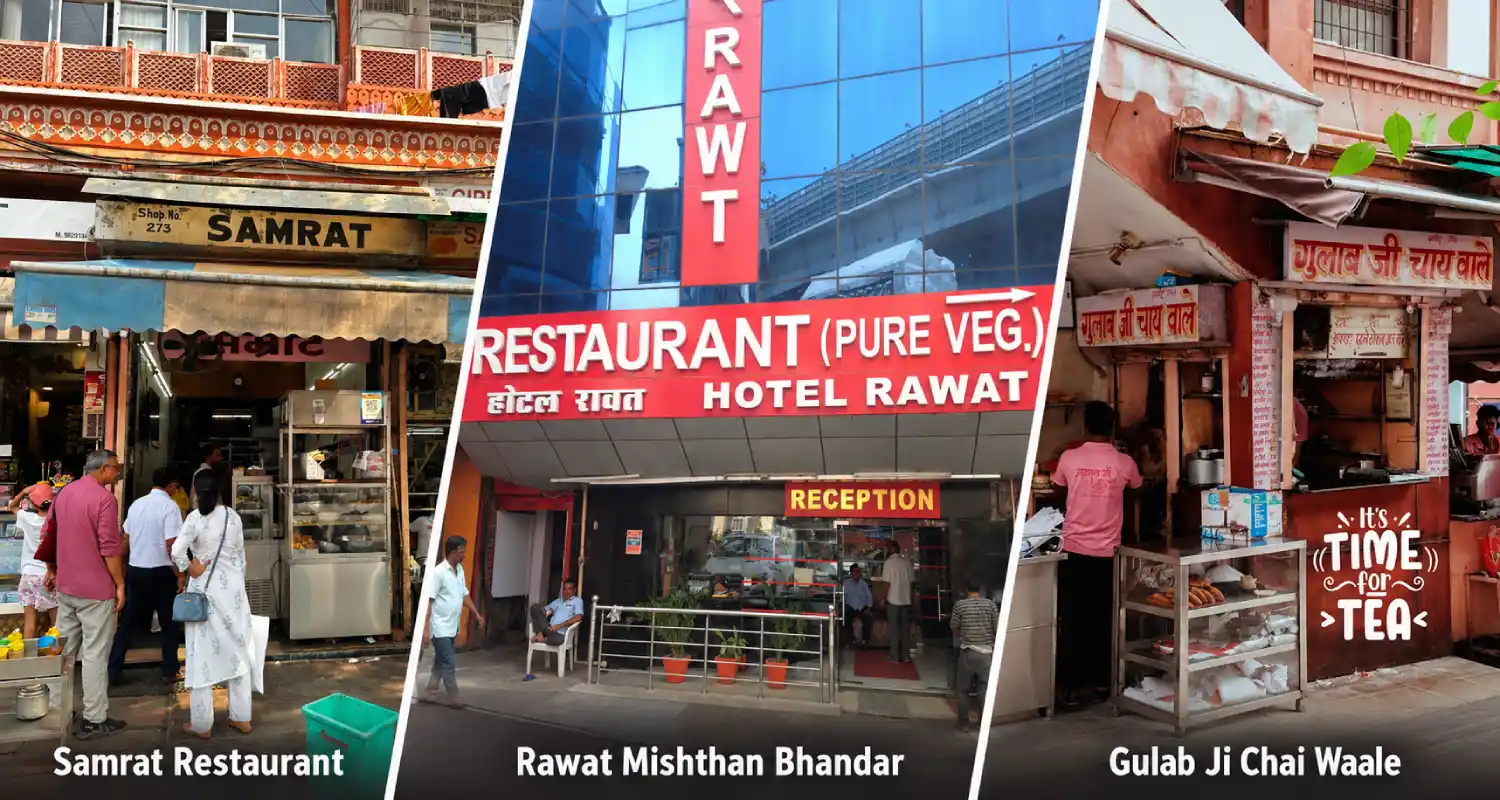
Jaipur food is rich, spicy and very much meant to be shared. These are the things I’d tell any visitor to try, and the places that keep coming up when people talk about them.
| Dish | What it is | Places to consider |
|---|---|---|
| Pyaaz kachori | A crisp, spicy onion kachori | Rawat Mishthan Bhandar is the classic stop. Samrat Restaurant on Chaura Rasta is a good old-city breakfast option. |
| Mirchi vada | A big chilli stuffed and fried | Samrat Restaurant, or Kanha for street-style snacks in a sit-down setting. |
| Laal maas | A fiery mutton curry | Handi is the name most people give. Spice Court also comes up. Ask for the spice level before you order. |
| Dal baati churma | Baked wheat balls with dal and sweet crushed churma | Chokhi Dhani for the full experience, or Masala Chowk to try several Rajasthani dishes in one place. |
| Ghewar and jalebi | A honeycomb-like sweet (a monsoon and Teej favourite) and crisp, syrupy jalebi | Laxmi Mishthan Bhandar (LMB), Johari Bazaar. |
| Mawa kachori | A sweet, syrupy, rich kachori | Famous sweet shops in the old city. |
| Lassi | Thick, cold, served in a clay cup | Lassiwala on MI Road. The original is shop no. 312, and there are similar-looking shops around it, so check the number. You drink it standing on the street. |
| Chai | Strong, sweet masala chai | Gulab Ji Chai Waale. |
Vegetarians will do very well here. Meat eaters should try laal maas at least once. Drink bottled water, and pick busy stalls for street food.
| What | Where | How to avoid a bad deal |
|---|---|---|
| Block-printed fabric and clothes | Bagru and Sanganer, Anokhi, Bapu Bazaar | Ask how the print was made. Small irregularities can occur in hand printing, but appearance alone does not prove authenticity. |
| Blue pottery | Specialist shops and workshops | Check for chips and glaze. Real blue pottery is fragile and uses no clay |
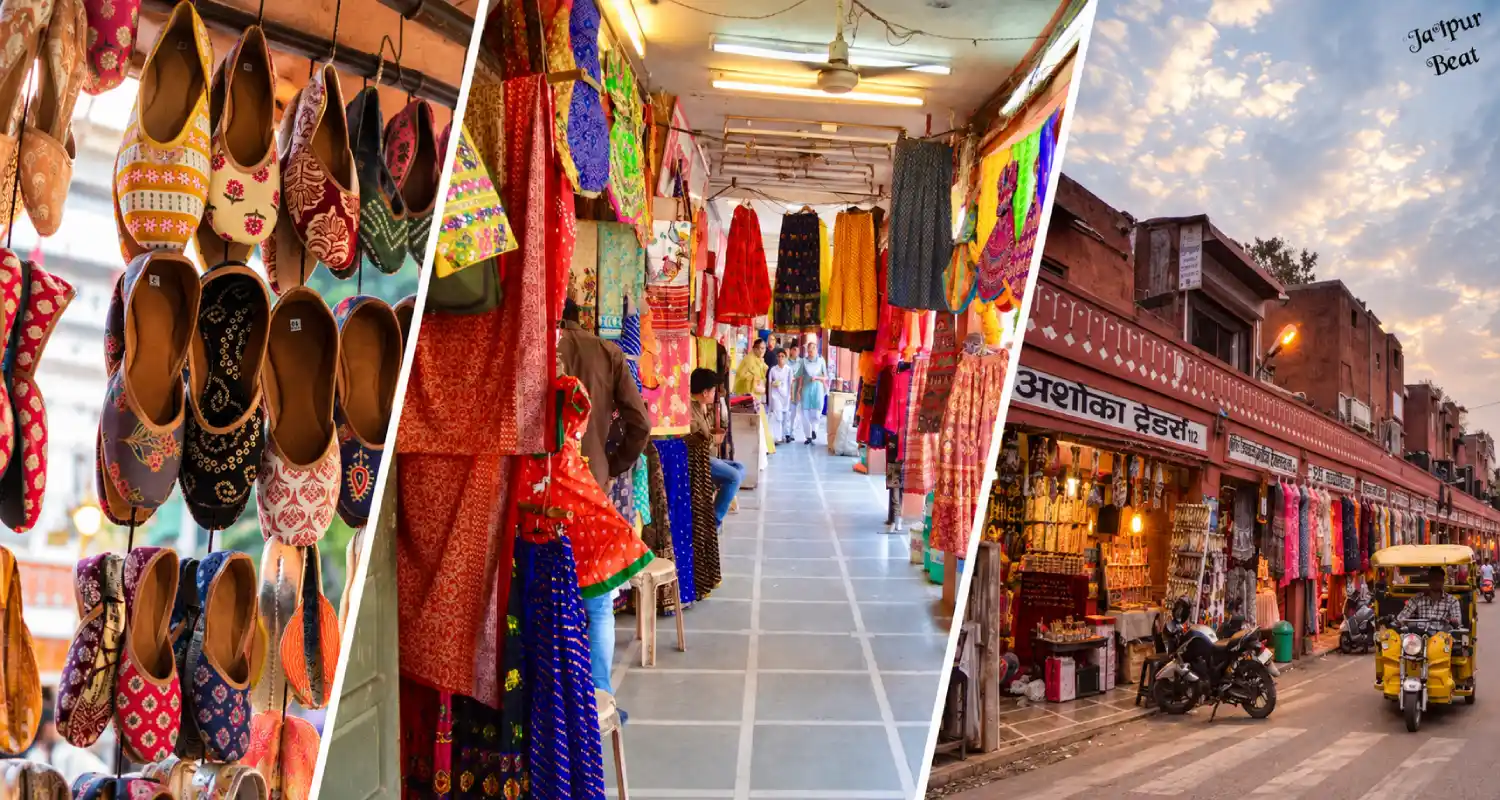
| Jootis (leather shoes) | Bapu Bazaar, Johari Bazaar | Try both feet and walk around before you pay |
| Lakh bangles | Lakh bazaar near Tripolia | Colours should be even, with no cracks |
| Jewellery and gemstones | Johari Bazaar | Buy only from shops that give a proper bill. Be careful with “export quality” claims |
| Handicrafts | Chandpol Bazaar | Bargain politely and compare two shops |
My shopping rules: compare prices in at least two shops, bargain politely where bargaining is customary, and do not buy gemstones as an investment on a stranger’s advice. A bill alone does not establish gemstone quality; seek an independent certificate for expensive purchases.
If you don’t enjoy bargaining, Rajasthali (the government emporium) has fixed prices. I’d still compare with one market shop.
A little care helps when arranging rides, guides and shopping. Watch for misleading claims and undisclosed charges. Official camera fees and cafe purchase requirements are legitimate conditions when clearly stated, rather than scams.
| What happens | How it works | What to do |
|---|---|---|
| “It’s closed today” | A tout or driver says a place is closed and offers to take you to another spot, usually a shop | Check on the official site, or walk up to the gate yourself |
| Commission shops | Your driver or guide takes you to a shop where he gets a cut | Say upfront: “No shopping stops” |
| Gemstone “export” deals | A friendly stranger offers a once-only deal on stones to resell abroad | Walk away. This is a well-known scam |
| Auto fares | Drivers quote high prices at the station or airport, or refuse the meter | Use Uber or Ola, or agree on the fare before you sit |
| Unclear hilltop ride charges | The quoted fare may not include waiting, parking or the full route | Confirm the full fare and return arrangement before leaving |
| Unofficial entry demands | Someone requests payment without an authorised counter or receipt | Check with attraction staff and pay only authorised charges |
| Fake or pushy guides | Unofficial guides at big sites | Hire only an official guide with a badge, and agree on the price first |

| Trip | Distance / time | Why go |
|---|---|---|
| Abhaneri (Chand Baori) | About 95 km | One of India’s deepest stepwells |
| Sambhar Lake | About 80–90 km; allow around 2 hours or longer, route-dependent | A major inland salt lake with salt pans, seasonal birdlife and nearby temples |
| Ranthambore | Allow about 3.5–4 hours or longer each way | Tiger reserve |
| Pushkar | Full-day trip | Lake and temple town |
| Bhangarh | Guided day tours available | Ruined fort with a spooky reputation |
Sambhar Lake offers a change from forts and palaces. It is a major inland salt lake and saline wetland, with salt pans and seasonal birdlife. Cooler months are comfortable for a visit. November to February is a useful period to look for migratory birds, including flamingos, but sightings depend on water levels and local conditions. Check recent conditions before leaving. Stay on permitted routes and keep your distance from birds and working salt pans.
| Time | Plan |
|---|---|
| At confirmed opening | Amer Fort |
| 11:30 am | Hawa Mahal photo stop |
| 12:30 pm | Lunch in the old city |
| 2:00 pm | City Palace |
| Before last entry | Jantar Mantar if time allows; otherwise Johari Bazaar |
| Day | Plan |
|---|---|
| Day 1: Forts | Amer, Jaigarh, Panna Meena ka Kund, Jal Mahal stop, Nahargarh at sunset |
| Day 2: Old city | Hawa Mahal early, City Palace, Jantar Mantar, Albert Hall, bazaars, dinner |
For Day 3, choose Abhaneri with a stop at Galta Ji if time allows, Sambhar Lake in the cooler months, Pushkar, or a block-printing workshop with shopping. Ranthambore is better with an overnight stay: book a safari in advance and allow time for travel and reporting. Wildlife sightings are never guaranteed.
Two days cover the main forts and the old city. Our 3 day Jaipur family itinerary gives you another way to plan a longer visit.
November to February is the most comfortable. Summer is very hot, and the monsoon brings short heavy showers.
It depends on the current price and the sights you plan to visit. Check OBMS or an authorised counter for current government-pass coverage and validity. City Palace and Jaigarh are outside that government scheme; City Palace has a separate composite offer. The savings table above is provisional until the government rates are confirmed.
Yes, with an early start and transport arranged. Visit Amer first, Jaigarh next and Nahargarh later, checking last-entry times and sunset access before setting out.
Watch the sunset at Nahargarh, see Amer’s light show, visit Patrika Gate after dark, or have dinner at a rooftop restaurant or Chokhi Dhani.
You can view Jal Mahal from public shore areas, walk through the bazaars and visit Patrika Gate when access is open. Check current rules at Panna Meena ka Kund and Galta Ji; do not assume every area or activity is free. Climb Amer wall sections only where access is explicitly permitted.
Dal baati churma, laal maas, pyaaz kachori, mirchi vada, ghewar and a clay cup of lassi.
Watch for misleading closure claims, undisclosed shopping commissions, gemstone resale offers and unclear ride or guide prices. Book tickets officially, agree on charges first and choose authorised guides. Official attraction fees are not scams when clearly disclosed.
Block-printed fabric, blue pottery, jootis, lac bangles and handicrafts. Compare prices in two shops before you buy.
Allow roughly 4–6 hours or longer by road, depending on route and traffic. Direct flights take around an hour in the air, plus airport time. Bus travel depends on the service, boarding point and stops; check the booked timetable.
 October 9, 2026
 October 4, 2026