

Prices run wide. A short camel ride starts around ₹300, a standard overnight camp comes to roughly ₹1,500–5,500 a head, and luxury glamping can start at ₹8,000 and go well past ₹15,000. What you pay comes down to the activity, the camp, which dunes you pick and, more than anything, the month. December and January are when it gets expensive.
| Safari Type | Typical Price per Person (₹) | What It Covers |
|---|---|---|
| Short camel ride | 300 – 600 | 30–45 minutes on the dunes |
| Sunset camel safari | 600 – 1,200 | 1.5–2 hours, usually with sunset |
| Jeep safari / dune bashing | 800 – 1,800 | 30–60 minutes in a 4×4 |
| Budget overnight camp | 1,500 – 2,500 | Basic tent, dinner, breakfast, folk music |
| Mid-range overnight camp | 2,500 – 5,500 | Swiss tent, attached toilet, camel ride, cultural show, meals |
| Luxury glamping | 8,000 – 15,000+ | Premium tent, better food, private activities |
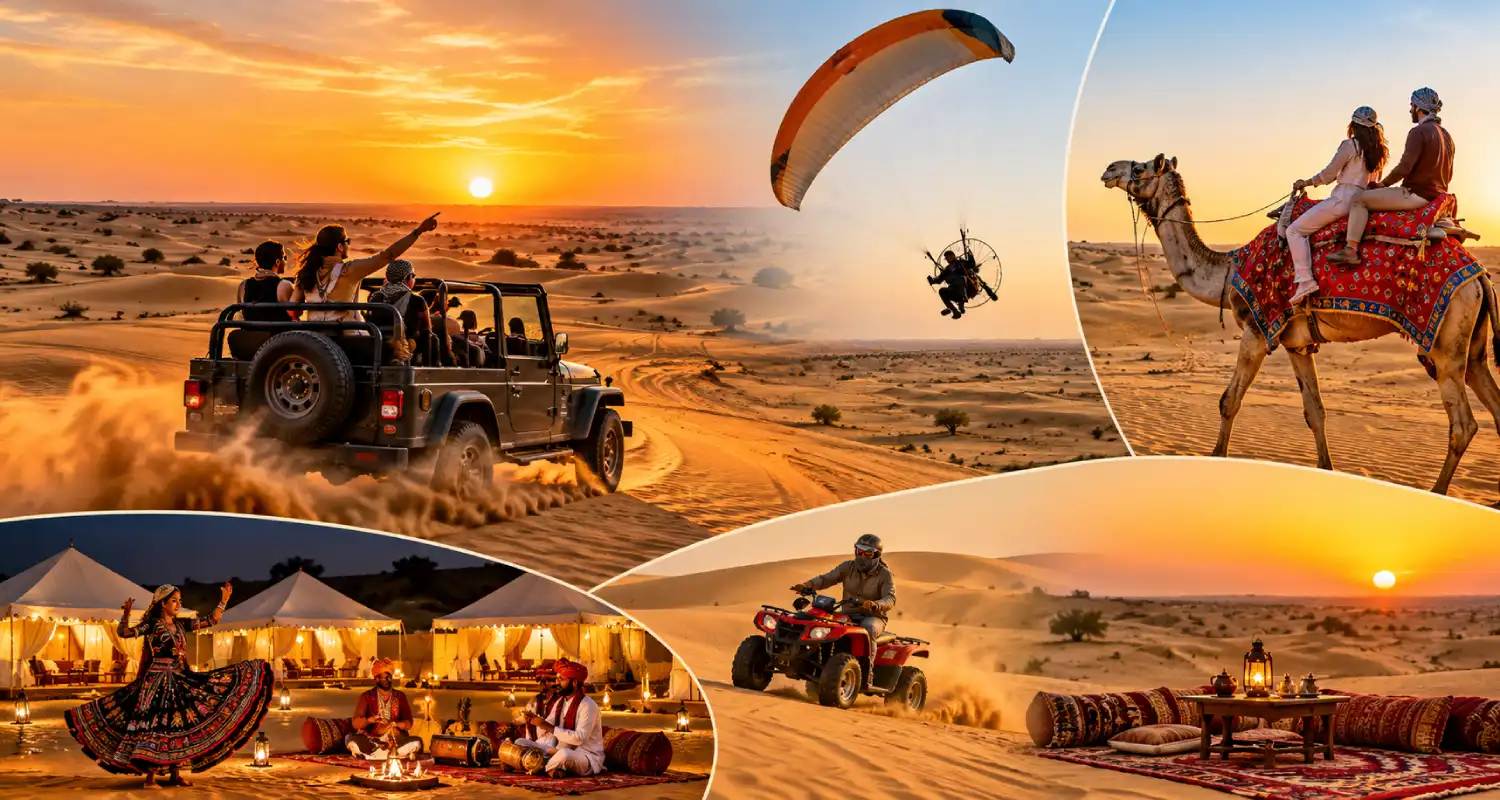
A camel ride is the cheapest way to see the dunes, and a luxury overnight stay is the priciest. Plenty of travellers mix two or three of these.
This is the classic Thar experience. A short ride of 30–45 minutes runs about ₹300–600 per person, while a sunset ride of an hour and a half to two hours is more like ₹600–1,200. Longer rides that stay out past dusk or head into quieter dunes sit at the top of that range. You’ll also see guides quoting ₹1,500–2,000, which is usually a longer ride or an opening price before any haggling.
A 4×4 run over the dunes lasts 30–60 minutes and costs roughly ₹800–1,800 per person. Dune bashing is part of that same price. It’s normally sold as an add-on to the camel ride rather than bundled in. Many dunes also offer quad biking (15–20 minutes), billed separately.
Several operators sell a half-day version: hotel pickup in the afternoon, a jeep or camel ride, tea and snacks, a folk show, dinner, and a drive back the same night. One Expedia listing prices an 8-hour jeep safari (2:30 pm to about 10:30 pm, with dinner, snacks and hotel pickup, but no camel) at RM 279 per adult, which is roughly ₹5,000–6,000 at recent exchange rates. International platforms tend to charge more than local camps, so compare before you book.
By far the most popular option: a tent, dinner, breakfast, a camel ride and an evening show. Depending on the tier, it costs anywhere from ₹1,500 to ₹15,000+. The next section breaks that down.
Treks of two nights or more head into quieter dunes, with a camel, a guide and camping out in the open. Operators price these per day and the range is wide, so ask for a written quote that spells out meals, bedding and the camel driver’s cost.
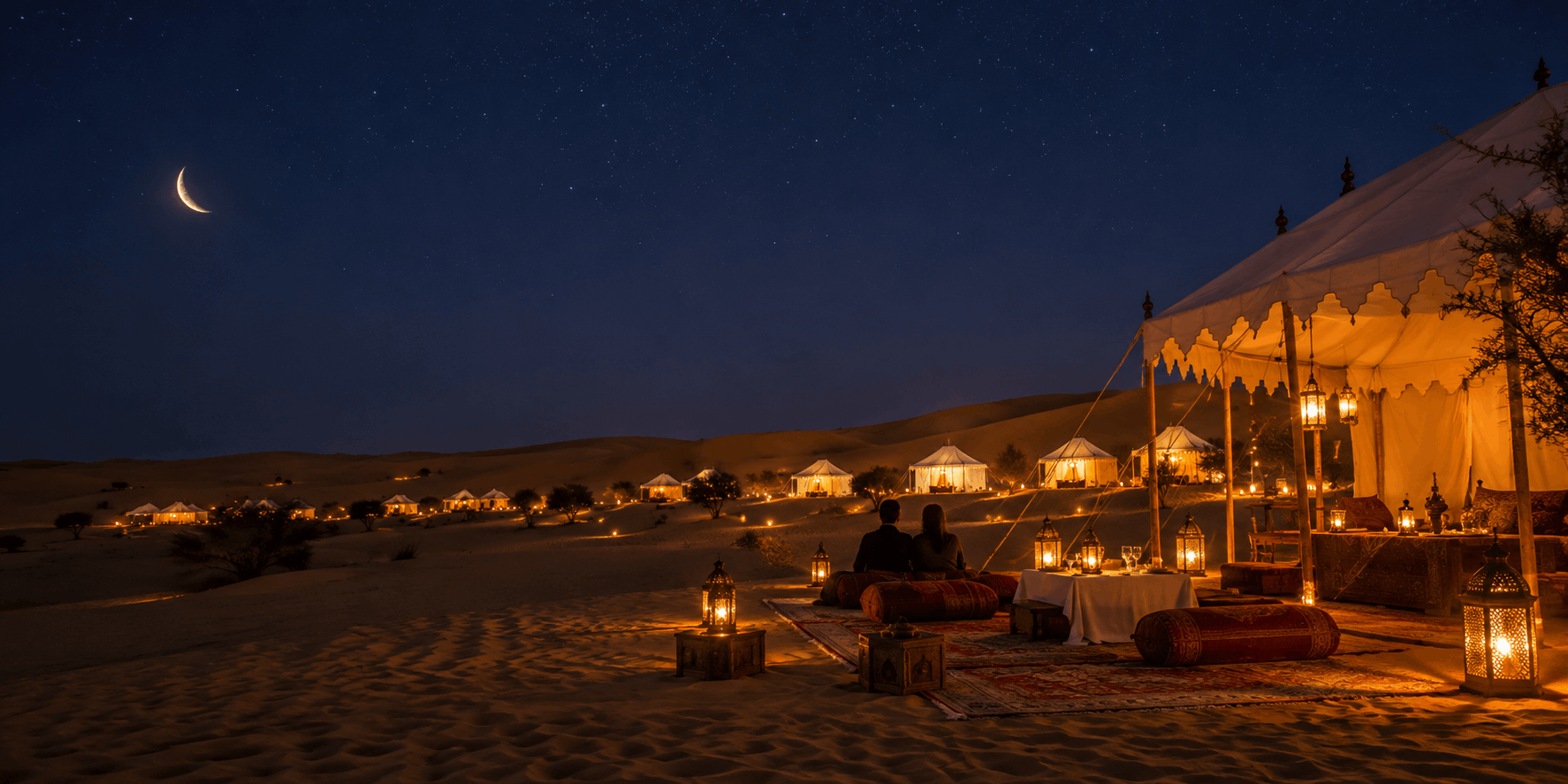
Most overnight packages land between ₹1,500 and ₹5,500 per person. Where you fall in that range depends on the tent and what’s thrown in.
| Camp Tier | Price per Person per Night (₹) | Tent and Facilities | Usually Included |
|---|---|---|---|
| Budget | 1,500 – 2,500 | Simple tent, often shared toilets | Dinner, breakfast, some folk music, campfire |
| Mid-range / deluxe Swiss tent | 2,500 – 5,500 | Swiss tent, bed, attached toilet | Camel ride, cultural show, dinner, breakfast |
| Luxury glamping | 8,000 – 15,000+ | Premium tent, better bedding, sometimes a pool | Better food, private dining, extra activities |
A full deluxe Jaisalmer Tour Package usually takes in a sunset camel ride, evening tea, a folk performance, a buffet dinner, your night in the tent and breakfast. Pickup from your hotel or the station, and the drive back to Jaisalmer by 9–11 am, are normally included too.
Sam and Khuri cost about the same. The real difference is how many camps you can choose from and what the night feels like.
| Factor | Sam Sand Dunes | Khuri |
|---|---|---|
| Distance from Jaisalmer | About 40–45 km | About 50 km |
| Drive time | 1–1.5 hours | 1–1.5 hours |
| Camp range | Budget to luxury, the widest choice | Mostly mid-range |
| Price level | Widest spread, highest in peak weeks | About the same as Sam, sometimes slightly lower |
| Feel | Busiest, staged shows, more light at night | Quieter, smaller dunes, less commercial |
If you want comfort, plenty of camps to compare and easy transport, Sam is the practical choice. If you’d rather have a quieter night and a darker sky for stargazing, Khuri is worth the extra distance. At both, prices jump around the Desert Festival and through December and January.
Getting there is its own cost. Packages usually include a private cab, but if you’re making your own way, set aside ₹300–500 per person for a shared ride, and more for a private car.
The month you travel moves the price more than anything else. December and January are the most expensive, and the same camp can cost two to three times what it does in a quiet month. One booking platform listed a camp near Sam at ₹6,000 for a night in mid-December and ₹16,999 for a night in early January.
| Period | Pricing | What to Expect |
|---|---|---|
| Mid-Dec to Feb | Highest | Peak crowds, cold nights, book weeks ahead |
| Late Oct to early Dec | Moderate to high | Pleasant weather, the season is starting |
| Early Nov, late Feb to early March | Good value | Fewer crowds, slightly lower rates |
| April to June | Low, with off-season discounts | Very hot days |
| July to Sept | Lowest | Monsoon humidity; many camps scale back or close |
The Jaisalmer Desert Festival (Maru Mahotsav) is expected on 18–20 February 2027, with the last night falling on the Magh Purnima full moon, according to Happy Fares and Top Indian Holidays, which lists the dates as tentative. Camps near Sam fill up and get pricier around then. Since the festival follows the lunar calendar, confirm the dates with Rajasthan Tourism before you book.
A standard overnight package covers the basics, but extras like a jeep safari or a longer camel ride add to the total.
| Extra | Typical Cost (₹) |
|---|---|
| Short camel ride (30–45 min) | 300 – 600 |
| Longer sunset camel ride | 600 – 1,200 |
| Jeep safari / dune bashing | 800 – 1,800 per person |
| Quad biking (15–20 min) | Priced on the spot; ask first |
| Alcohol, cold drinks, bonfire upgrades | Varies, often marked up |
| Tips for camel handlers and staff | 100 – 300 |
| Peak-season surcharge (Dec–Jan) | Can double the rate |
Quotes for the same activity vary between sources, mostly because of ride length and whether you’re paying the first price or a negotiated one. Before you hand over an advance, check that taxes, the camel ride and transfers are included.
These totals multiply the per-person ranges above by group size and add the usual extras. They’re planning estimates, not quotes.
| Traveller Type | Total Budget (₹) | What It Buys |
|---|---|---|
| Solo, budget | 2,000 – 3,000 | Basic camp, camel ride, dinner, breakfast; add ₹300–500 for a shared ride to the dunes |
| Couple, mid-range | 6,000 – 11,000 | Deluxe Swiss tent with attached bathroom, sunset camel ride, show, meals; a jeep safari adds about ₹2,500 |
| Family of four | 12,000 – 25,000 | Two tents or one family tent, meals, transfers; ask about child pricing |
| Couple, luxury or honeymoon | 16,000 – 30,000+ | Premium glamping, private dining, extra activities |
In peak weeks, from mid-December to February, plan for the top of each range or a bit beyond.
A camel ride starts at ₹300. An overnight camp is ₹1,500–5,500 for budget to mid-range tents and ₹8,000–15,000+ for luxury glamping.
Usually the sunset ride is. Longer rides and jeep safaris tend to cost extra.
Ask every time. Some online listings price one tent for two adults.
Most camps want a partial advance. Get the booking confirmed in writing.
Established camps are popular with both. Read recent reviews, confirm the tent and bathroom setup, and stay away from operators you can’t verify.
Winter nights get cold. Bring a warm jacket, scarf, closed shoes, sunglasses, sunscreen, a power bank and a torch.
 October 27, 2026
 October 27, 2026