
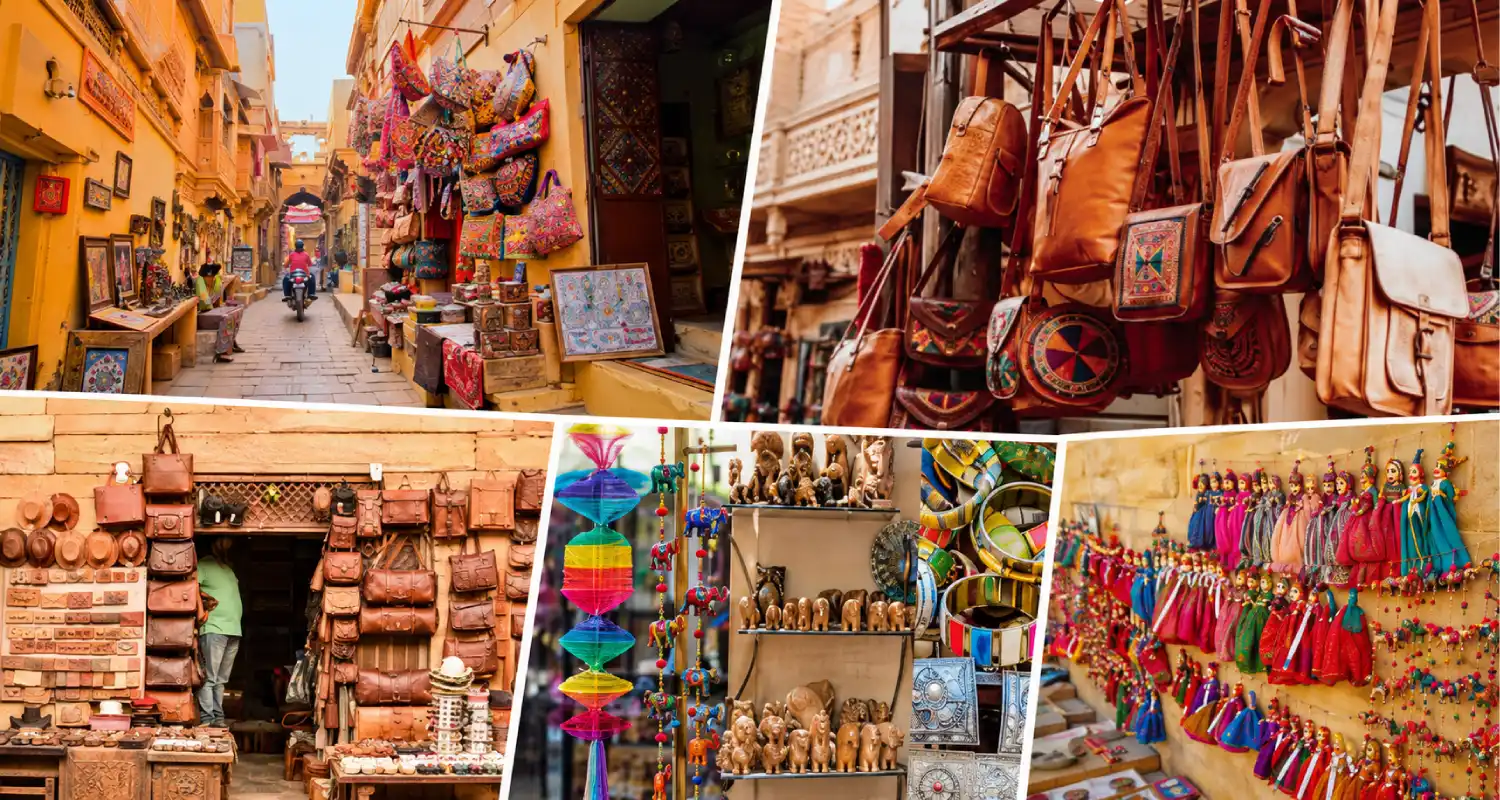
Forget malls and designer labels. Shopping in Jaisalmer happens in narrow lanes and sandstone havelis, where artisans sell handmade crafts that carry the stamp of the Thar Desert. Whether you’re after a gift, a keepsake, or something to brighten up your home, here’s what’s worth bringing back and where to find it.
Here is the quick checklist of things to buy in Jaisalmer for you.
| Category | Things to Buy |
|---|---|
| Textiles & Clothing |
|
| Jewellery & Accessories |
|
| Handicrafts & Home Décor |
|
| Traditional Stoneware |
|
| Food & Edible Souvenirs |
|
We know you don’t understand some of the things in the list, so let’s get the detailed information about the things.
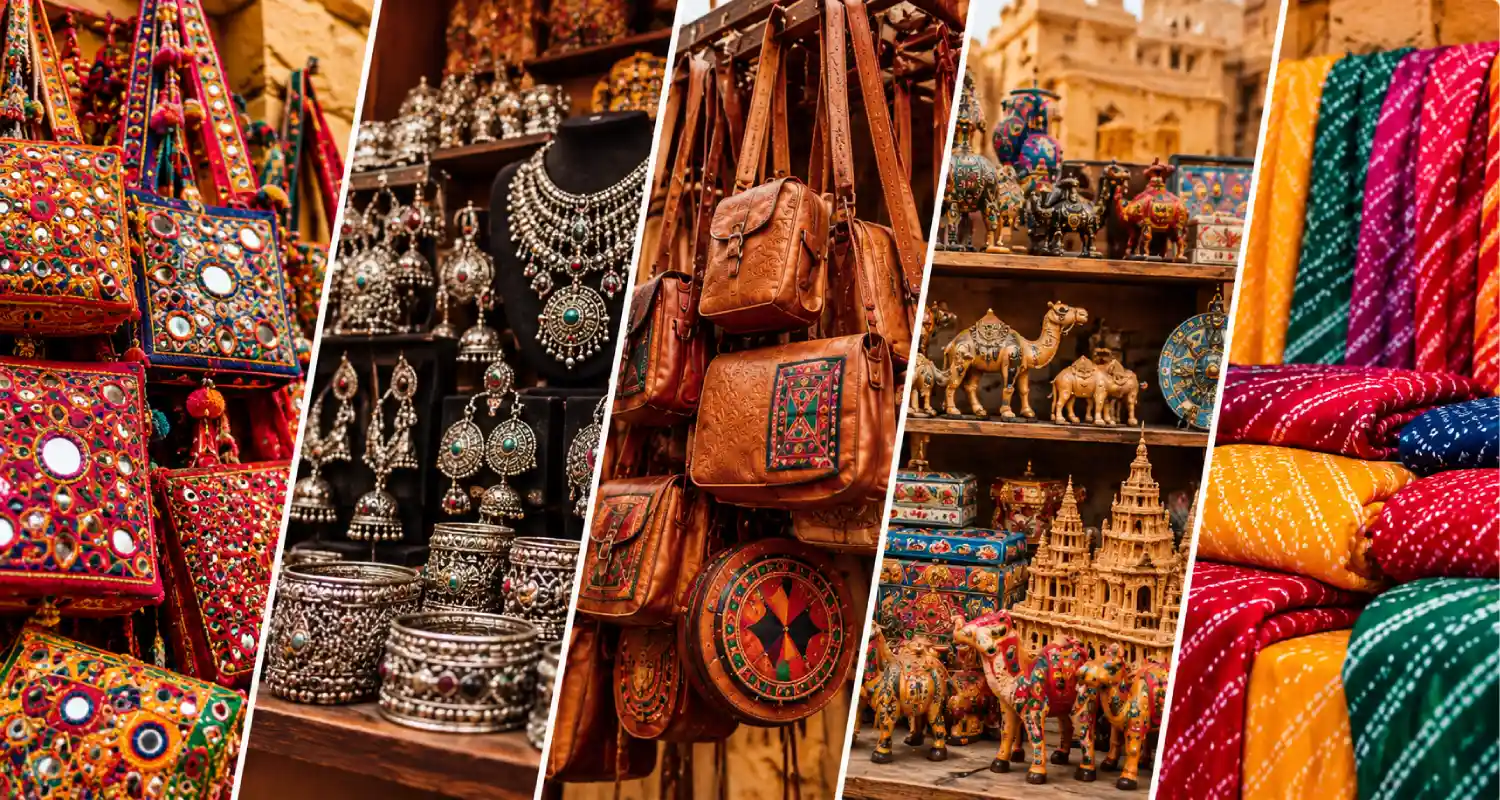
Jaisalmer’s mirror embroidery is some of the finest in Rajasthan, and you’ll spot it everywhere: on bedspreads, cushion covers, wall hangings, bags, and traditional clothing.
Centuries of Rajputana and tribal design live on in the silver here. The oxidised pieces with an antique finish are the local signature, and they suit an ordinary weekday as easily as a special occasion.
Visitors love it, and with good reason. Bags, footwear, belts, and jackets are all on offer, often at friendlier prices than in the big cities.
Yellow sandstone pieces, Rajasthani puppets, paintings, carpets, and shawls all make lovely gifts. Travelling light? Stick to the smaller handicrafts, which slip easily into a bag.
Bandhani is tie-dyed in tiny dots, while leheriya flows in bold diagonal waves. Both come in bright colours and turn up as dupattas, sarees, turbans, and fabric lengths, and they fold down small enough to carry anywhere.
Also spelled Hadur, this fossil-bearing stone from around Jaisalmer holds traces of aquatic life said to be around 180 million years old. It’s shaped into plates, bowls, and glasses, and it’s even used to set curd. Some people credit it with medicinal properties, though that’s tradition rather than science. Buy from a reputable shop, and ask for a bill.
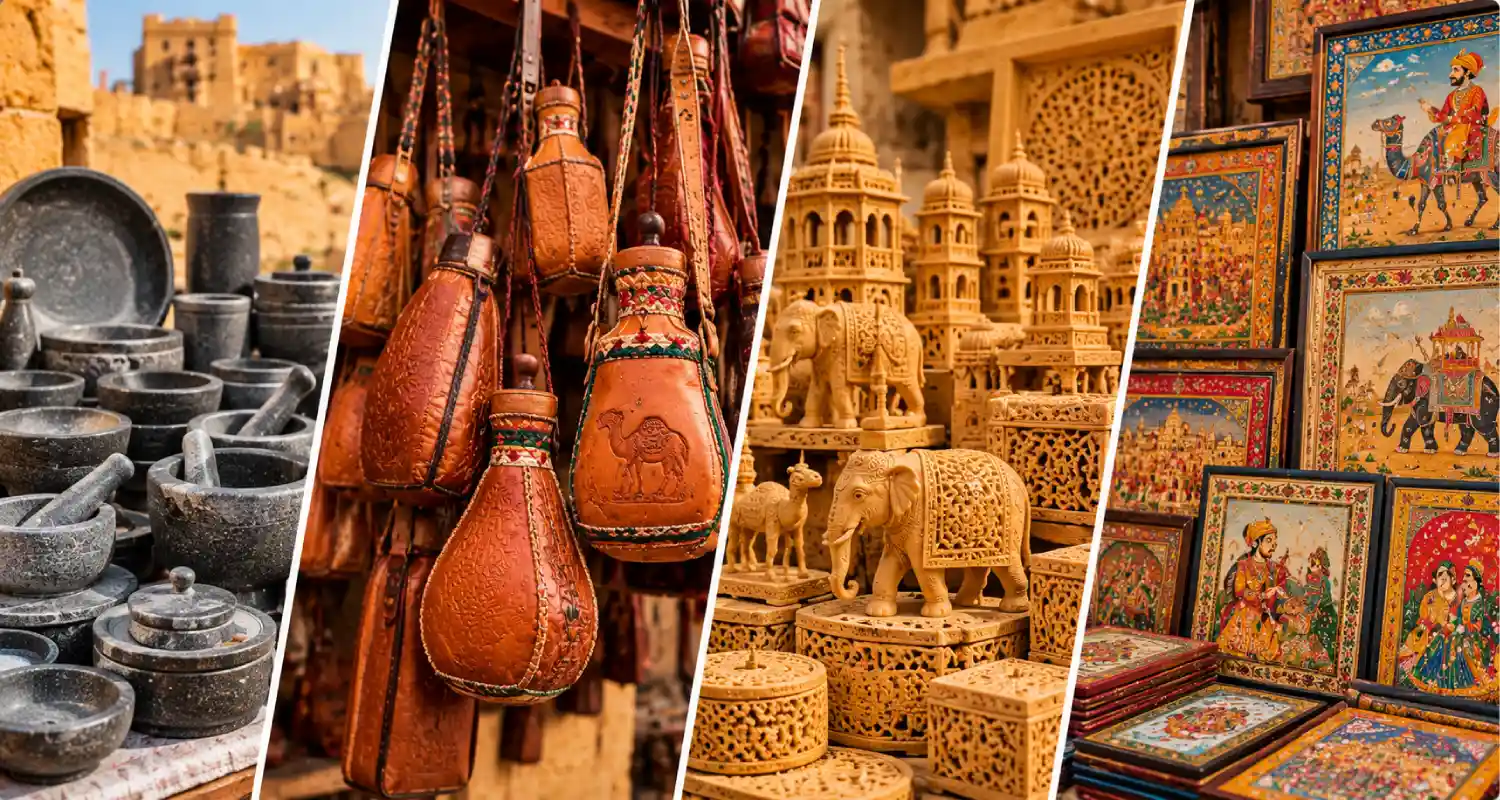
Long before steel and plastic bottles, desert travellers carried their water in a kopi, a light pouch shaped from camel hide that kept the contents cool. These days it’s often painted or embossed, and it’s a great conversation piece for a shelf at home.
The same honey-coloured stone that built the fort and the havelis is carved into souvenirs, too. Small models of the fort, lattice panels, and patterned sculptures are common finds. Sandstone is heavy, so if you’re flying, choose a smaller piece.
Tiny, detailed, and richly coloured, these are a classic piece of Rajasthani art. Ask the seller whether a painting is hand-painted or printed, because the price gap can be large.
These brightly dressed Rajasthani dolls usually come as a couple, made to hang by a door or window. They’re light, affordable, and pack flat, so they’re a favourite for gifts.
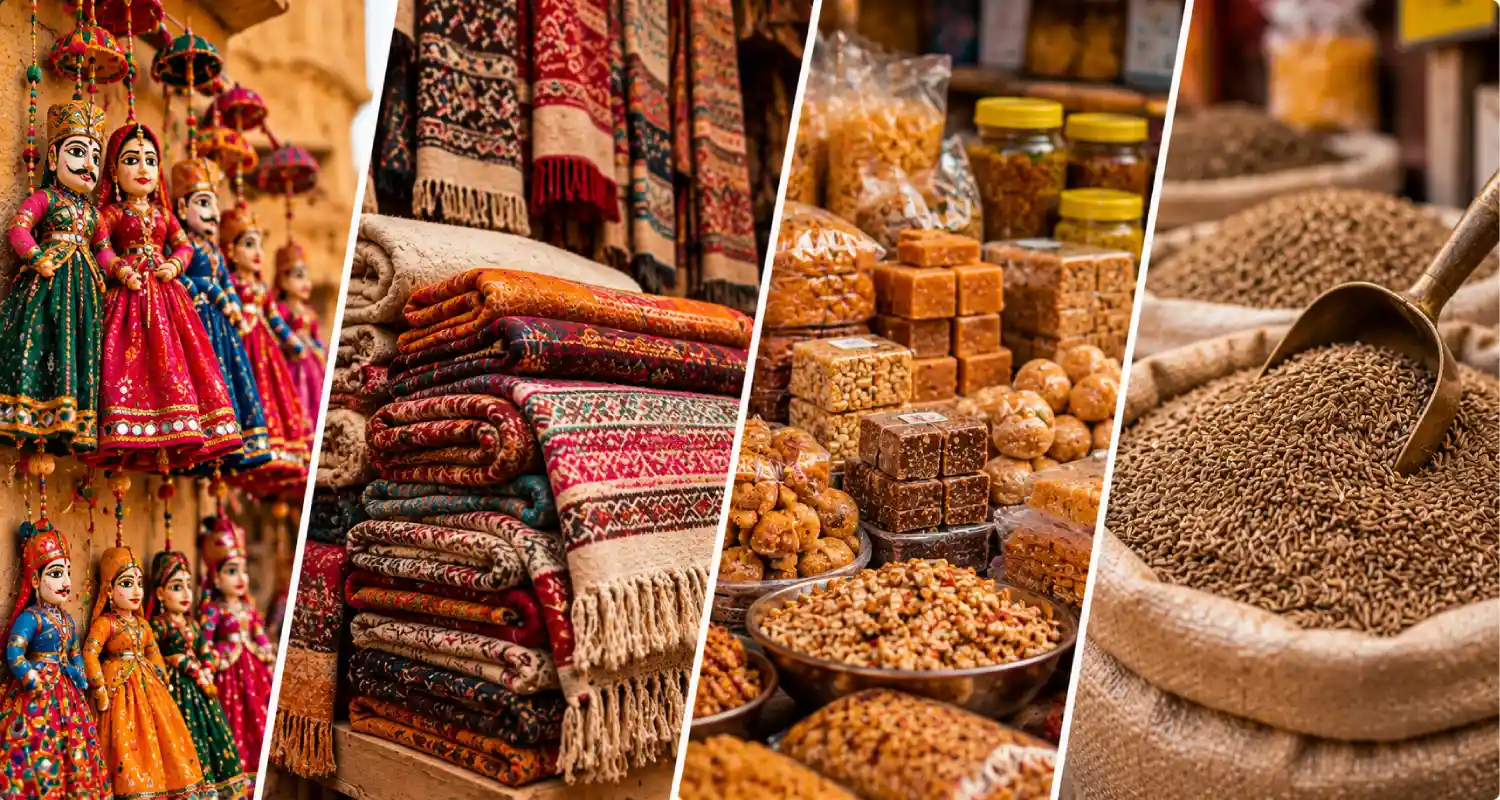
Warm and cosy for chilly desert nights, these are a souvenir you’ll actually use. They’re bulkier than most things on this list, so leave some room in your luggage.
Sweets and snacks are an easy gift for the people back home, and ghotua ladoo is a local favourite. Pick sealed packs and check the dates before you pay.
Jeera grown around Jaisalmer thrives in the dry desert soil, and local kitchens use it daily. Many people find it more fragrant than ordinary cumin. Sealed packs travel well and cost little, which makes them a handy gift for anyone who loves to cook.
Every market has its own personality, so it helps to know what to expect before you go.
Jaisalmer is famous for silver jewellery, mirror-work textiles, camel leather bags, Rajasthani puppets, yellow sandstone handicrafts, and traditional Bandhani fabrics. Ghotua ladoo and local spices are also popular things to take home.
Pansari Bazaar, Sadar Bazaar, Bhatia Bazaar, and Manak Chowk are among the popular shopping areas in Jaisalmer. Pansari Bazaar is known for traditional handicrafts, while Sadar Bazaar is a good place to explore leather products, textiles, and souvenirs.
Some of the best souvenirs from Jaisalmer include miniature fort models, Rajasthani puppets, embroidered cushion covers, oxidised jewellery, and small sandstone carvings. For lightweight gifts, consider Bandhani dupattas, hanging dolls, or locally packed sweets.
Shopping in Jaisalmer can be affordable, depending on the product, quality, and market. Small handicrafts and souvenirs are generally budget-friendly, while handmade textiles, genuine silver jewellery, and detailed sandstone carvings can cost more. Comparing prices and bargaining politely can help you find better deals.
Habur stone is a fossil-bearing stone found in the Jaisalmer region. Local artisans use it to make bowls, plates, and glasses. It is also traditionally associated with setting curd. Although some sellers claim health benefits, these claims are not scientifically established.
Yes, bargaining is common in many traditional markets in Jaisalmer, especially when buying clothes, handicrafts, and souvenirs. However, government emporiums and fixed-price stores generally do not negotiate. It is best to compare prices at a few shops before purchasing.
For family and friends, you can buy Rajasthani puppets, Bandhani dupattas, silver earrings, camel leather accessories, handmade wall hangings, and ghotua ladoo. These gifts reflect Jaisalmer’s local craftsmanship and culture, with options for different budgets.
 October 27, 2026