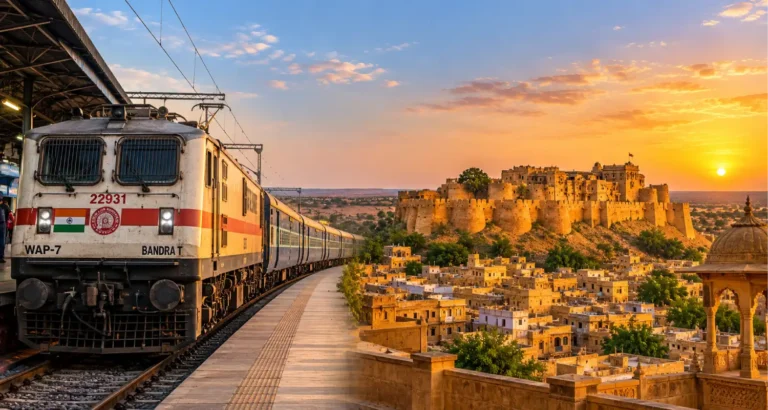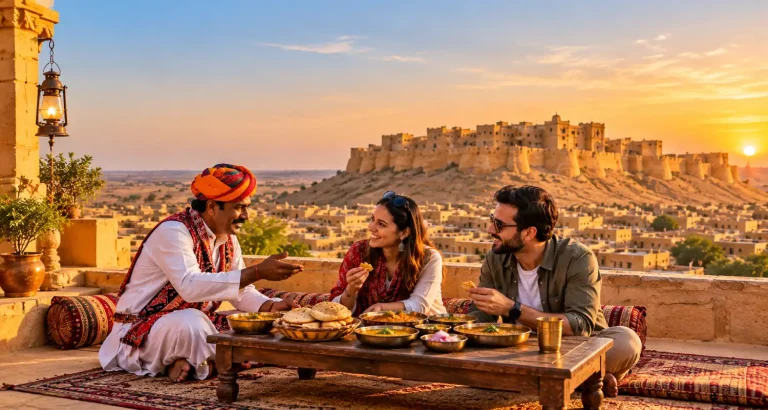

Ask most people what they remember about Jaisalmer and they’ll say the golden fort, the sunsets and the dunes. The food rarely comes up, and that’s a shame. Life in the desert has always meant making the most of very little, and the cooking shows it. Dried beans, lentils, gram flour, yogurt and plenty of ghee turn up in almost everything, and the result is rustic, bold and hard to forget.
This Jaisalmer food guide covers what to eat in Jaisalmer, from Jaisalmer street food to royal-style curries. Because the city is such a busy tourist stop, you’ll also spot Bengali, Italian and Tibetan menus around town, but the local plate is where the fun is. If you’re planning a trip with EaseTrippers, here’s what to eat.
| # | Dish | What It Is | Best For |
|---|---|---|---|
| 1 | Pyaaz Kachori | Crisp pastry with spicy onion filling | Breakfast, street food |
| 2 | Dal Pakwan | Crisp flat bread with warm chana dal | Breakfast |
| 3 | Rabdi Doodh | Thick, slow-cooked sweet milk | Evening dessert |
| 4 | Mirchi Bhajiya | Gram flour fried green chillies | Snack |
| 5 | Makhania Lassi | Thick, creamy lassi eaten with a spoon | Cooling down |
| 6 | Dal Baati Churma | Baked wheat balls, dal and sweet churma | Lunch or dinner |
| 7 | Ker Sangri | Desert berry and bean sabzi | Vegetarian main |
| 8 | Gatte ki Sabzi | Gram flour rolls in yogurt gravy | Vegetarian main |
| 9 | Laal Maas | Fiery red mutton curry | Spice lovers |
| 10 | Safed Maas | Mild, creamy mutton curry | Non-veg, mild taste |
| 11 | Bengali Thali | Home-style Bengali meal | A change of flavour |
| 12 | Bhang Lassi | Cannabis-based drink from licensed shops | Adults only, with caution |
| 13 | Local Beer and Wine | Chilled drinks from local shops | Adults only |
| 14 | Ghotua and Panchdhari Laddu | Desi ghee sweets | Take-home gift |
Some of the best meals of our trip didn’t come from a restaurant at all. They came from the small stalls and shops just outside the fort walls, where you stand, eat and watch the day go by. If you only have time for three food stops, make it these.
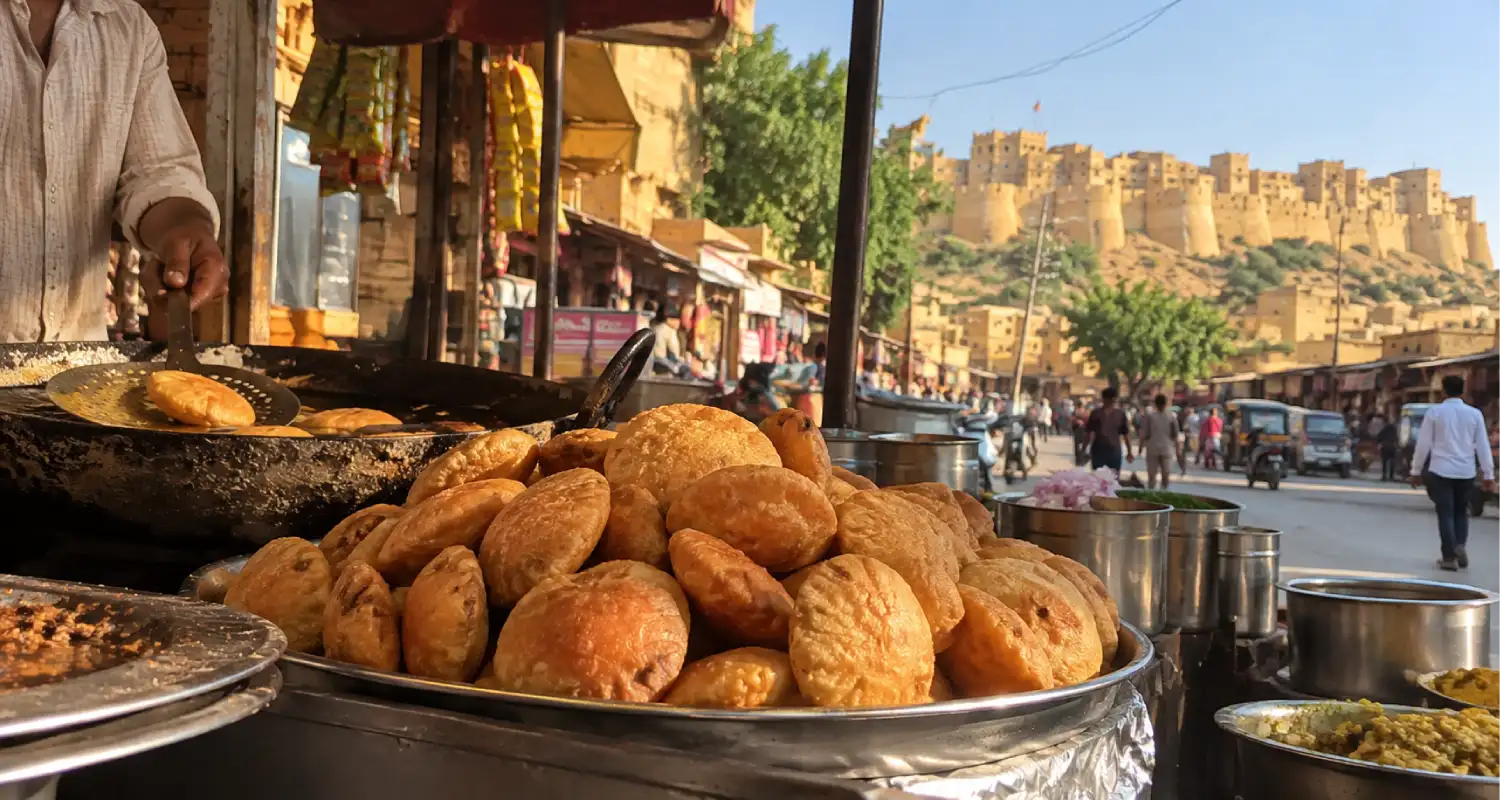
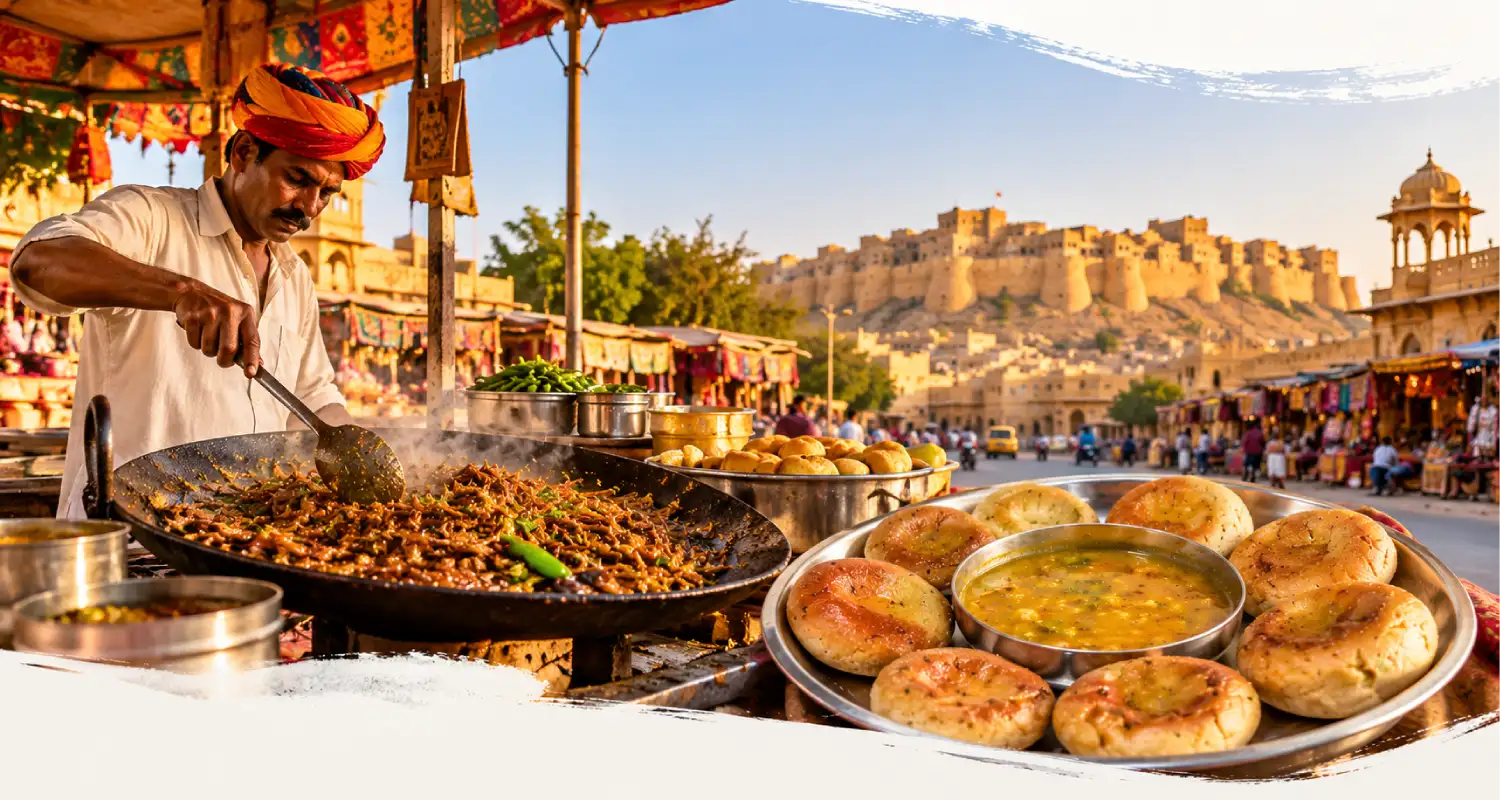
Start your morning right outside the fort. The kachori comes out hot and crisp, stuffed with a spicy onion filling, topped with sev and served with mint and tamarind chutneys. Rajasthan loves its kachoris, but the carts around Jaisalmer seem to draw a bigger crowd than most, with locals and tourists queuing side by side. Eating it fresh, standing in the sun with the fort rising behind you, is one of those small travel moments that stays with you. Go early, because the best batches go quickly.
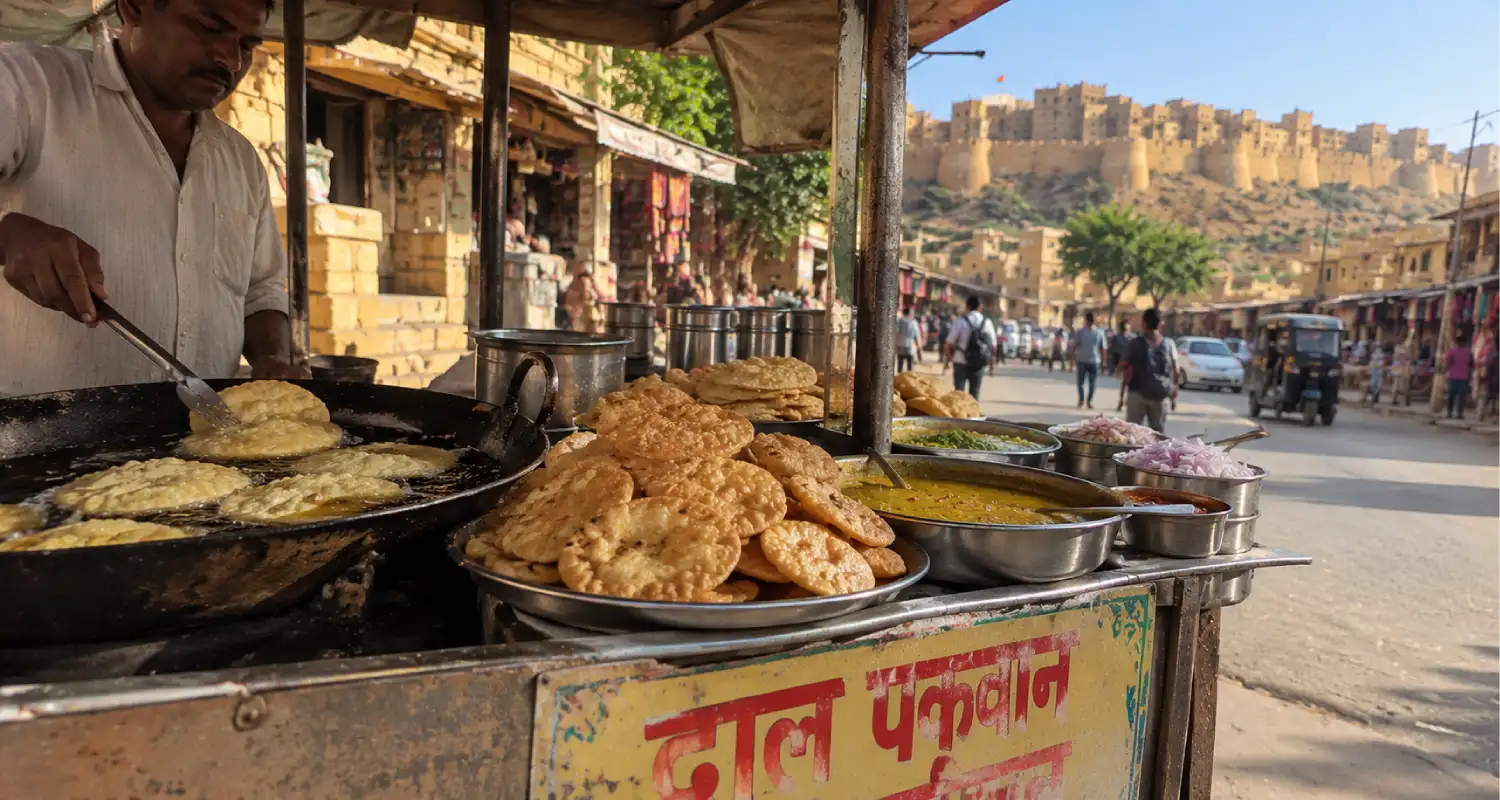
This one is a proper comfort breakfast. Pakwan is a crisp, flat, golden fried bread, served with a warm, mildly spiced chana dal, usually with chopped onion, chutney and a bit of tang on top. The crunch against the soft dal is what makes it so satisfying. It’s filling, easy on the wallet and a great way to begin a long day of walking through the lanes.
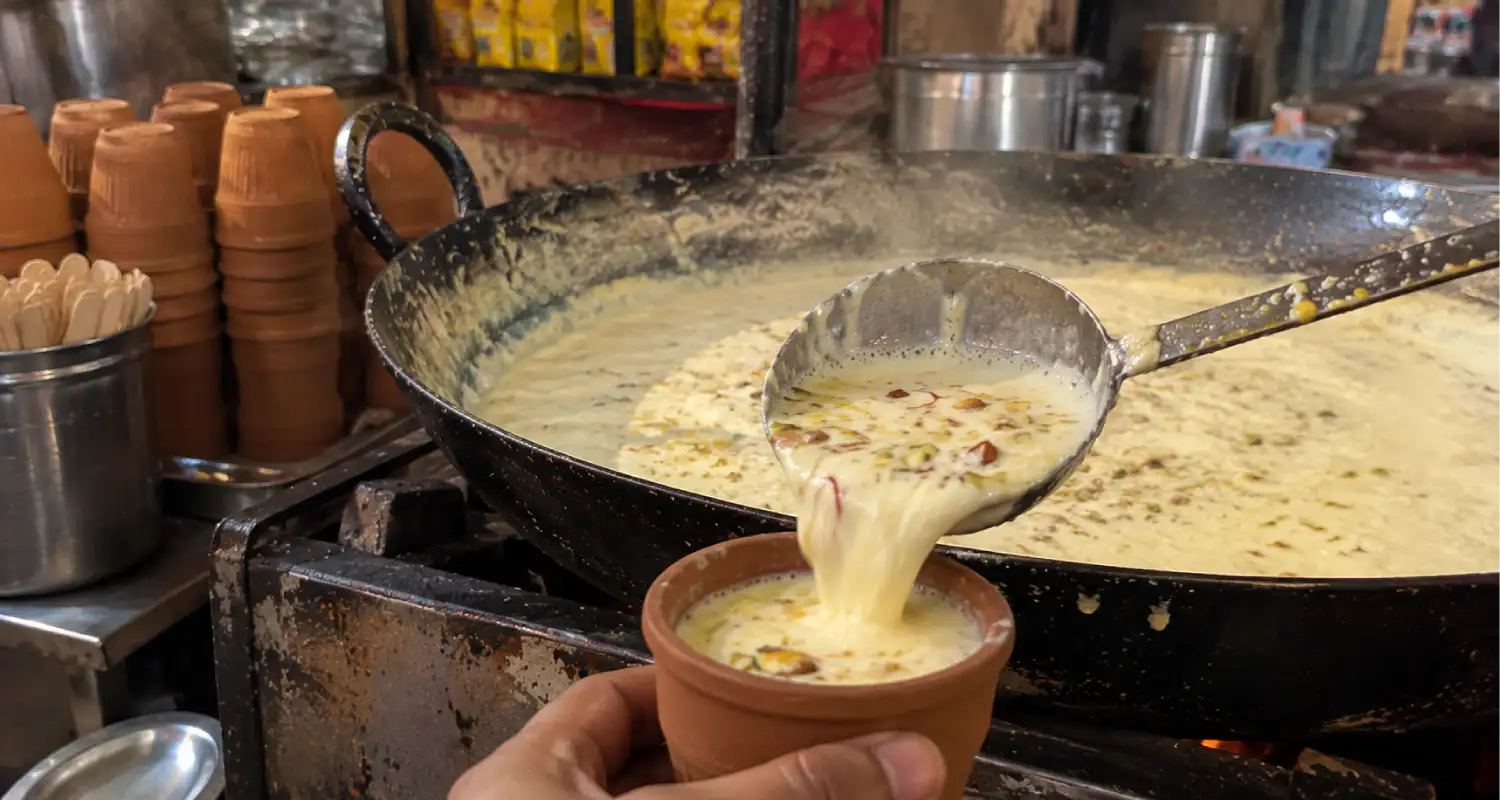
After all the spice, you’ll want something sweet and soothing, and this is it. Rabdi doodh is thick, slow-cooked milk, rich and creamy, lightly sweetened and often served with a few nuts on top. Have it warm on a cool evening or when you feel like winding down after sunset. It tastes like it took hours, because it did. Don’t skip it.
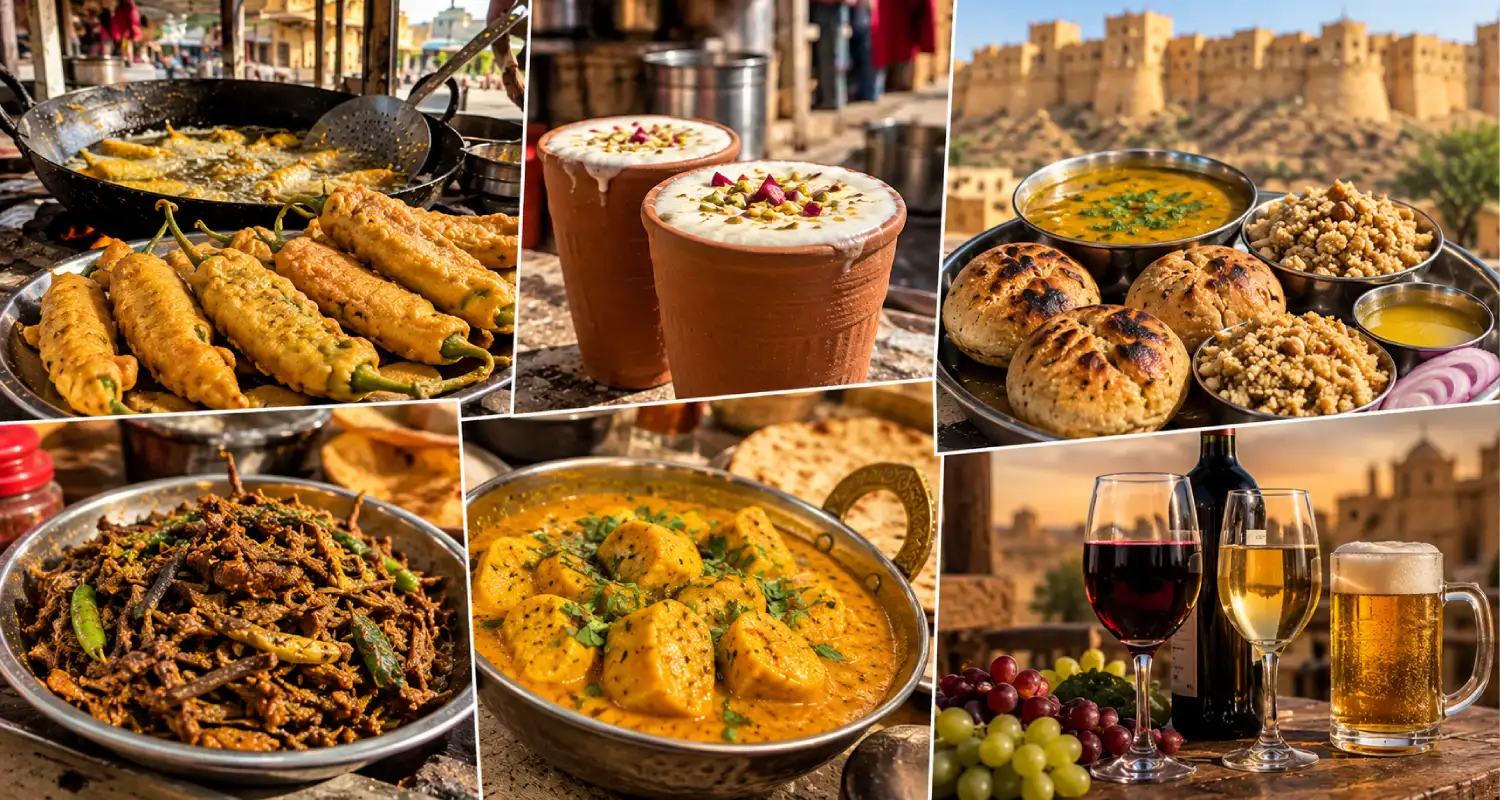
Green chillies dipped in gram flour batter and fried until crunchy. They’re hot, salty and dangerously easy to keep eating. They’re also sold at some of the old sweet shops near the fort, which makes a nice excuse to stop for a snack between sightseeing spots.
Forget the tall glass. This lassi is so thick and creamy that you eat it with a spoon, and it tastes a lot like shrikhand. Kanchan Shree Ice Cream, inside the fort, is the shop most people name for it, and it also gets a mention in Lonely Planet. After a morning of walking in the sun, it’s a very good place to sit down.
This is the dish people think of first when someone says Rajasthani food in Jaisalmer. The baati is a firm ball of wheat dough, baked over firewood or in a tandoor and then dunked in ghee. It comes with hot lentil dal and churma, a crumbly sweet made from wheat flour, gram flour, semolina, sugar, ghee and nuts. Break the baati open, pour the dal over it and let the ghee do the rest.
You’ll struggle to find this outside the desert belt. Ker is a small, sour desert berry and sangri is a dried bean. Ker is so tart that it’s traditionally soaked in salted water for days before cooking. It’s then simmered slowly with local spices and chilli. Eat it with bajra roti and you’ll see why locals are so loyal to it.
Gram flour is shaped into little rolls, cooked, then dropped into a tangy, medium-spicy yogurt gravy. It looks plain, but the flavour is earthy and filling. It goes with roti or rice, and it’s a gentle introduction if you’re new to Rajasthani food.
This one is for meat lovers who can handle heat. Mutton is cooked with yogurt and a generous red chilli paste, and the result is properly fiery. Your server may ask how spicy you want it. Be honest, because even “medium” can surprise you. Pair it with rice or roti.
Think of this as Laal Maas’s calm sibling. The mutton is cooked in yogurt with a smooth almond and cashew paste, so it comes out creamy, mild and rich. Order it alongside Laal Maas and switch between the two. The cool one rescues you from the hot one.
It sounds odd, but Jaisalmer sees a steady stream of Bengali travellers. Over the years, small restaurants and lodges have sprung up to serve them home-style meals. Think aloo posto and sweet tomato chutney, simple food cooked with real care. Sitting in the desert and eating a thali that tastes like a Kolkata kitchen is a surprise worth having.
Bhang, a cannabis-based preparation, is part of Rajasthan’s festival culture, and a few government-authorised shops in Jaisalmer sell it openly. You’ll find them near the fort’s east and west gates, and they usually display their licence. Visitors mostly try bhang lassi or take home bhang cookies. A word of caution: it can hit harder and later than people expect, so start small, never mix it with alcohol, and skip it if you’re unsure or have a long drive ahead. Buy only from licensed shops.
Days in Jaisalmer are hot and nights turn surprisingly chilly, and either is a fine reason to try a chilled beer or a glass of wine. If you’re of legal drinking age, local liquor shops are easy to find. Many have hand-painted boards with charming spelling mistakes, which are fun to spot. Drink in moderation and don’t drive afterwards.
Save these for last, since they’re what you carry home. Both are made with desi ghee, and neither needs a fridge. Dhanraj Bhatia Sweets, a well-known old shop in the lanes near the fort, says they stay fresh for around a month at room temperature. Finding the shop means threading through narrow lanes and honking bikes, but the first bite makes it worth it. Buy more than you think you need.
You can also explore other local souvenirs in our Jaisalmer shopping guide.
A good meal can make a trip. A kachori breakfast outside the fort, a camp dinner under the stars and a bowl of rabdi doodh at night all add up. Let EaseTrippers plan your Jaisalmer tour package so you can focus on eating, and tick off every item on this Jaisalmer famous food list.
Jaisalmer is best known for Dal Baati Churma, Ker Sangri, Gatte ki Sabzi, Laal Maas, Pyaaz Kachori and Ghotua Laddu. These dishes rely on desert ingredients like dried beans, gram flour, lentils and ghee.
Start with Pyaaz Kachori and Dal Pakwan outside the fort, then try Dal Baati Churma and Ker Sangri with bajra roti. Finish with Rabdi Doodh and Ghotua Laddu.
Pyaaz Kachori, Dal Pakwan and Mirchi Bhajiya are the most popular street snacks. You’ll find them at carts and small shops around the fort area.
It is a breakfast dish of crisp, flat fried bread served with warm, mildly spiced chana dal, onion and chutney.
It is thick, slow-cooked sweet milk, often topped with nuts. It’s rich, creamy and usually enjoyed in the evening.
Most traditional food is vegetarian because fresh produce is limited in the desert. Non-veg dishes like Laal Maas and Safed Maas are also easy to find.
It’s a desert vegetable dish made from ker berries and sangri beans. It has a tangy, earthy taste and is usually eaten with bajra roti.
Laal Maas is a fiery mutton curry made with red chilli paste. Safed Maas is a milder, creamy mutton curry made with yogurt and almond-cashew paste.
Kanchan Shree Ice Cream inside Jaisalmer Fort is widely recommended for it.
Ghotua Laddu and Panchdhari Laddu are the popular choices. They are made with desi ghee and can stay fresh for around a month without refrigeration.
Yes. Many small restaurants and lodges serve Bengali thalis with dishes like aloo posto and sweet tomato chutney.
Government-authorised bhang shops operate in Jaisalmer, including near the fort gates. Buy only from licensed shops, use it in small amounts and never combine it with alcohol or driving.
Generally yes, if you choose busy stalls with fresh, hot food. Drink only bottled water and avoid raw salads if you have a sensitive stomach.
 October 27, 2026